Carlson's Luger
Carlson's Luger is the pistol that George Milton uses to shoot Lennie Small at the Salinas River pool, an object that passes from a ranch hand's holster to the center of the novel's final, unbearable act. It is the only gun that appears in the story, and its journey from a piece of everyday bunkhouse equipment to the instrument of a mercy killing marks the collapse of every hope the two men have carried. The Luger is not a symbol of power or justice; it is a tool that George picks up, steadies, and fires with his own shaking hand, and its single shot ends not only Lennie's life but the dream of the little place, the rabbits, and the fatta the lan'.
Origin and Ownership
The Luger belongs to Carlson, a ranch hand who carries it as a matter of course. It is a practical object, not a treasured heirloom: Carlson keeps it in his side pocket, and when George needs it, he simply reaches in and brings it out. The gun has no special history in the story before the final scene; it is merely the weapon that happens to be available. When George later tells Carlson that Lennie had the gun, Carlson accepts the explanation without question, and the Luger's ownership is never disputed. It is a thing that passes from hand to hand, and its ordinariness makes what George does with it all the more devastating.
George's Use of the Gun
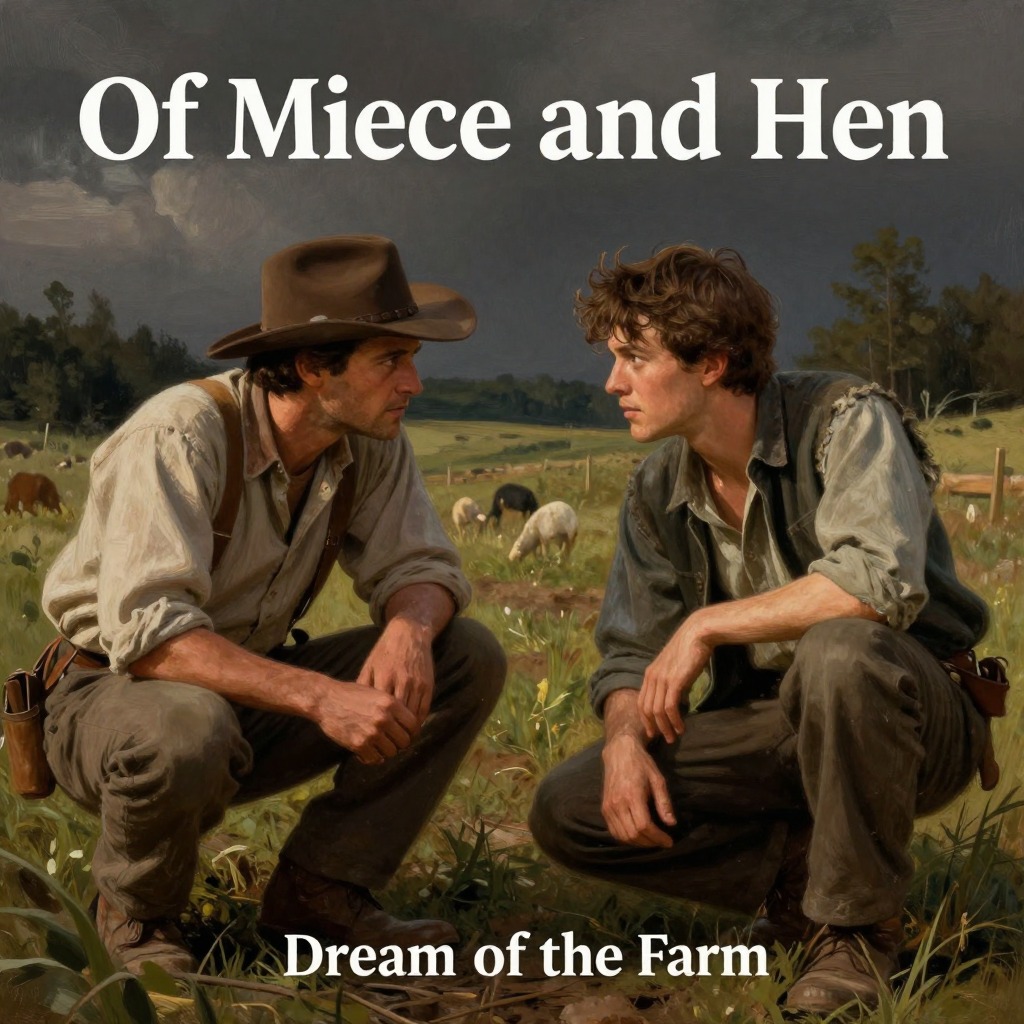
George takes the Luger from his side pocket as he begins to recite the dream of the farm for the last time. He snaps off the safety, and the hand and gun lie on the ground behind Lennie's back while George looks at the back of Lennie's head, at the place where the spine and skull are joined. The gun is present from the first moment of the recitation, a silent counterpoint to the words about cows, pigs, chickens, and alfalfa. George raises the gun, but his hand shakes so violently that he drops it to the ground again. He raises it a second time, steadies it, and brings the muzzle close to the back of Lennie's head. The hand shakes violently, but his face sets and his hand steadies. He pulls the trigger. The crash of the shot rolls up the hills and rolls down again. Lennie jars, then settles slowly forward to the sand, and lies without quivering. The gun does not misfire, does not waver; it does exactly what a gun is made to do, and the precision of the act is what makes it so terrible.
Aftermath and Disposal
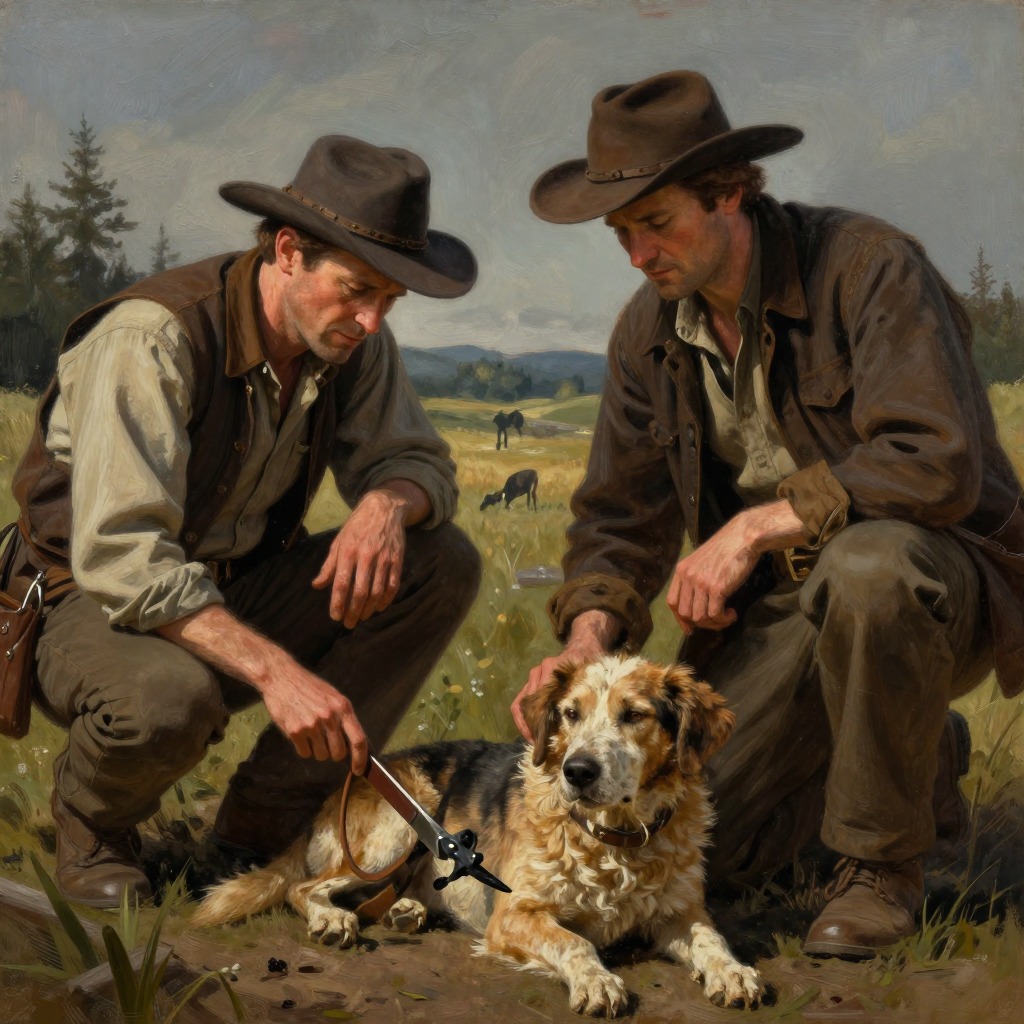
Immediately after the shot, George shivers and looks at the gun, then throws it from him, back up on the bank near a pile of old ashes. He does not keep it, does not hand it to anyone; he casts it away as if it has become something he cannot bear to touch. When Carlson and Curley arrive, Carlson asks how George did it, and George says tiredly, "I just done it." Carlson presses: "Did he have my gun?" George says yes. "An' you got it away from him and you took it an' you killed him?" George whispers, "Yeah. Tha's how." The lie is quick and complete: George claims he took the gun from Lennie, not that he brought it himself. The Luger becomes the prop of a cover story, a piece of evidence that lets the men believe Lennie died in a struggle rather than in a deliberate execution. George looks steadily at his right hand that had held the gun, and the gun itself lies discarded on the bank, no longer needed.
Thematic Significance
The Luger is the object that makes the dream impossible. Throughout the novel, George and Lennie have talked about the little place, the rabbits, the cow, the pig, the chickens, the alfalfa — a future built on work and care, not on violence. The gun belongs to a different world, the world of Carlson and Curley, where disputes are settled with force and where a man's worth is measured by his ability to protect himself. When George uses the Luger, he borrows that world's logic for a single, agonizing moment. The gun does not belong to the dream; it belongs to the reality that destroys the dream. And after the shot, George throws it away, as if to say that the act itself has no place in the life he will now have to live. The Luger is not a symbol of justice or mercy; it is a thing that was used, and then discarded, and the men who find it afterward do not understand what has happened. Carlson's final question — "Now what the hell ya suppose is eatin' them two guys?" — shows that the gun's story is invisible to everyone except George and Slim, who knows that "a guy got to sometimes."